MYSTORY with …
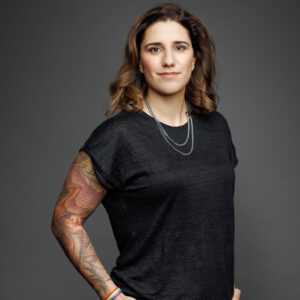
alex
34 Years, fRANKFURT
“It was Black trans* women who educated me about
our community’s history and present, the privilege
of being queer in Europe and about the long
way we have to go to eradicate discrimination…”
Published: September 2023
Privileges, Education & Coming outs.
I struggled to sit down and write this. It often feels like I don’t have something meaningful to share, but when it comes to my coming out story, it also feels like it was just super uneventful. It is a super privileged position unavailable to many members of our community who have to fear for their safety if they come out. I wish for all members of our LGBTQIA2S+ community to have uneventful coming outs and possibly even no need at all for coming out in the future.
When I was 15 years old, I realized I was bi. I cared more about Xena, Warrior Princess and her soulmate situation with Gabrielle than I did about whatever straight girls my age were supposed to care about. I was attracted to men and women and didn’t know at the time that the gender spectrum held many more beautiful expressions.
Today, I would describe myself as pan or omni if we must have a label – to me, I’m simply queer.
I’m not attracted to only one gender identity. I just didn’t know because there wasn’t a lot of queer representation back in 2003.The L Word came out in 2004, and while it hasn’t aged well and is not a great example of an intersectional approach, it changed my world at the time, as did The L Word podcast.
I told my mom very soon and it wasn’t a big deal. Mostly because she’s super tolerant, but also because it probably didn’t feel real. I’d never had a boyfriend or girlfriend when I lived at home.
But I must have been worried about her reaction because I kept my first girlfriend a secret. I like to think that this wasn’t just because of her gender but also because we met online, had not met in person as there was an ocean between us and I associated the whole situation with shame. I was 19 and left Germany to move in with my Canadian girlfriend in Brighton, a queer hotspot in Europe. We broke up after 6 months, and I think to this day, most of my family and friends thought she was a roommate. My second relationship was with a man. No coming out needed there, everyone knew him as my boyfriend.
The queer community remained a fixture in my life. Most of my friends and housemates were queer, I had fallen in love with the art of drag and went to every show that I could. I owe a lot to the queer community; they have helped me overcome whatever was holding me back from normalizing my own queerness while I was celebrating everyone else’s. They have shown me how to accept myself, how to fight for my community, how to exist in a world that assumed everyone is straight. It was black trans* women who educated me about our community’s history and present, the privilege of being queer in Europe, in a queer city, and about the long way we have to go to eradicate discrimination for ALL the beautiful members of our community who face violence and discrimination for simply living the life they were born to live. I was an ignorant 20-year-old and have been educated by their kindness and their fights. I wish I could say that I educated myself – I did, in later years – but that initial education was done by the people most marginalized in our society, and I owe them so much. I became an activist for queer and women’s rights and continue learning to this day. Although there is still a long way to go, one of the biggest achievements of our community is this: An elder trans* woman (she allowed me to say that) said to me last year, “Finally, trans* people can have a future! When I grew up, there simply was no representation and only the threat of dying young. I didn’t know I would be happy; that simply wasn’t in the cards. Today, trans* kids can see a future; we have trans* actors and actresses, athletes, politicians, ordinary couples who are happy.” That being said, we both agree that a lot remains to be done to ensure a safe future for trans* kids and adults.
I met the woman who would become my wife in 2012. We were colleagues first and then close friends for years before our friendship turned into love. It seems to be an unwritten rule that whenever two women are colleagues, not married, and hang out, they must have an affair. At least that was the rumour at work long before we developed romantic feelings for each other. I remember when we went to the cinema, it was the hot topic at work in certain gossip circles for a whole week. Sometimes rumors got back to me about sightings of us doing suspicious things like drinking coffee and sometimes these rumors were even completely made-up.
People were talking about us being together long before we were together, so when we started dating, we didn’t tell anyone but two friends at work. We just “were.”
Same with my mom. She immediately clocked that we were together, and that was that. I just walked through the world, normalizing the fact that I had a girlfriend who then became my wife, and most people respond in kind. I’ve been privileged enough to be working at a diversity-aware company when I fell in love with her, and when I switched companies, I was in senior enough positions that people did not dare to comment anything homophobic to my face. I’m not ignorant though; I’m aware it happened behind my back. I’m aware it happens to others, and I know that homophobia still is rampant in the workplace and our society. After years of remarkable progress for queer rights (which are, fundamentally, human rights), we find ourselves confronted with a historic backlash that threatens to roll back the hard-fought gains of decades, not just in terms of legal protections but also in public perception.
It is a critical moment for LGBTQIA2S+ communities and their allies, demanding swift action and unwavering solidarity.
There it goes. My Coming Out is not a very interesting story. In fact, a lot of what’s interesting is between the lines: about my own internalized stuff, stuff I had to unlearn, and things about which I was completely and utterly wrong. Like when I assumed my until-then 100% straight girlfriend would only treat “us” as an experiment, that she would never tell her family about us, that this new experience would shake her self-image to the point where she’d run. Or that she would have difficulty adjusting to a relationship after being single for 16 years and wouldn’t be able to make space for me. That it wouldn’t last.
We’ve been together for 100 months in July 2023, married for 4 years. She still doesn’t know how to load the dishwasher like a human being, but other than that, we’re fine.
Attacks against our community are increasing on a global scale. Merely celebrating the few rights and limited acceptance that gay, lesbian, and bisexual individuals have achieved is not enough. The TIN* community is far from experiencing the same rights and acceptance. We must continue fighting until discrimination against queer BIPOC, queer people with disabilities, LGBTQIA2S+ migrants, and especially discrimination against our trans and non-binary siblings is eradicated. We cannot settle for mere awareness and visibility. Society is aware of us; what we need is equal protection, respect, and opportunities that should be extended to everyone within our global community.
(Note: *TIN refers to the transgender, intersex, and non-binary community)
Dear aLex, Thank you very much for YourStory!
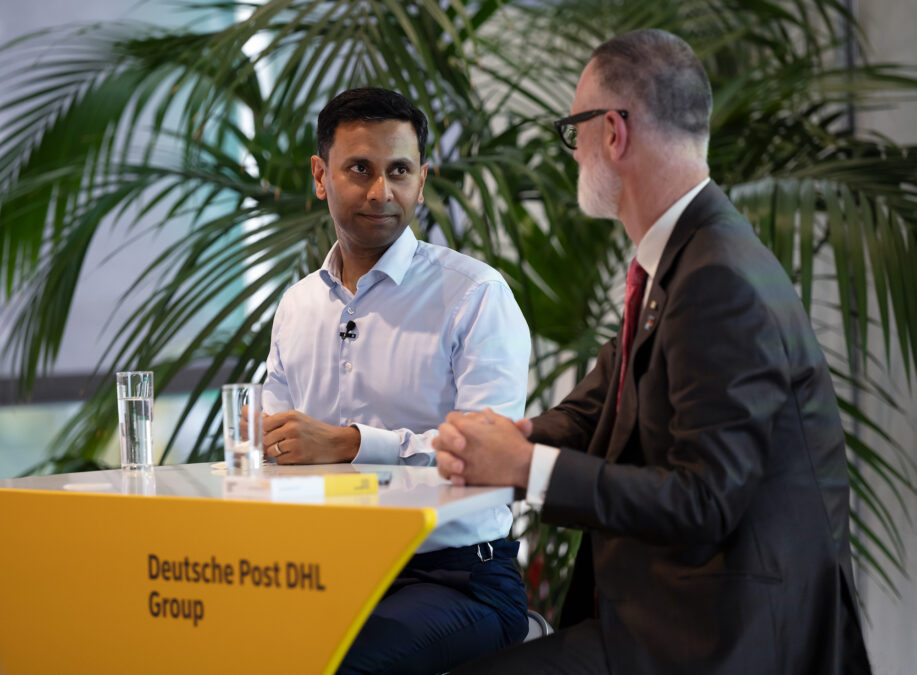
DR. SHIVAJI DASGUPTA
“HAVING THE FREEDOM TO BE WHO YOU ARE GIVES YOU SO MUCH MORE AGENCY AND ALLOWS FOR SO MUCH HIGHER PRODUCTIVITY BECAUSE YOU DON’T HAVE TO HIDE ANYTHING.”
Many people think that sexual or gender identity has no place in the workplace and therefore does not need to be discussed. But the truth is different – the hiding of LGBT*IQ employees who are not outed is often at the expense of team spirit, energy and motivation in the workplace and limits the productivity of these people immensely. For this reason, it is important to create an “open and inclusive corporate culture that supports all employees in using their full potential to achieve the company’s goals.” – says Albert Kehrer, Chairman of the PROUT AT WORK Foundation. To get one step closer to this goal, this year’s DINNER BEYOND BUSINESS keynote speaker – Dr. Shivaji Dasgupta – provided powerful insights into his world as an out executive during a “Fireside Chat” and highlighted the importance of commitment to LGBT*IQ equal opportunities on the part of companies.
At the PROUT AT WORK Foundation’s 6th DINNER BEYOND BUSINESS, hosted by Deutsche Post DHL Group in Bonn, the focus was on the commitment of companies and their leaders to the LGBTIQ community. “We are all united tonight by the desire for people to be able to come to the workplace with their authentic selves and not have to hide a significant part of their personality.” – said Dr. Thomas Ogilvie, Member of the Board of Management and Labor Director of Deutsche Post DHL Group in his welcoming speech. More than 35 senior executives from major companies and institutions accepted the invitation, including representatives from BASF, Clifford Chance, Continental, Commerzbank, Ergo, IKEA, ING Diba, NTT Data, Oracle, Otto, Robert Bosch, Sandoz, Sodexo and UniCredit. In the immediate vicinity of the Rhine, the participants of the top-class information and networking event enjoyed an exclusive dinner. Albert Kehrer explained the background of DINNER BEYOND BUSINESS in his welcoming speech: “We believe that there is a business case behind the support for LGBTIQ: an individual one for the people who come out, but also on a corporate level – whether B2B or B2C.” The highlight of the evening was the “Fireside Chat” by the CEO of the host PROUT AT WORK Foundation, together with keynote speaker Dr. Shivaji Dasgupta, Out Executive and Chief Data Officer at Unicredit on diversity, responsibility and leading by example.
“People then know they can trust you on other issues as well – you get an added bonus of trust as a leader if you’re completely open and honest.”
At the beginning of the 45-minute talk, Dasgupta shared private insights as an out executive: “99% of the reactions to my coming out have been overwhelmingly positive. Having the freedom to be who you are gives you so much more agency, and allows for so much higher productivity because you don’t have to hide anything.” At the same time, it has a clear impact on the professional environment: “People then know they can trust you on other issues – you get an extra trust bonus as a leader if you’re completely open and honest.” According to Dasgupta, companies also benefit considerably from their commitment to LGBT*IQ equal opportunities, whether through better results due to more diverse teams or when recruiting talented employees.
“Executive Allies are so important because they send a very strong signal throughout the organization that discriminatory behavior will not be tolerated.”
Also highlighted in the “Fireside Chat” was the influence of Allies: “Executive Allies are so important because they send a very strong signal in the organization that discriminatory behavior will not be tolerated.” Against the backdrop of different legal realities for LGBT*IQ around the world, the Indian-born executive is also concerned about valuing and taking advantage of freedoms here:
“We should all feel fortunate to be where we are and take this opportunity to help others.”
Drawing of the talk with DR. SHIVAJI DASGUPTA
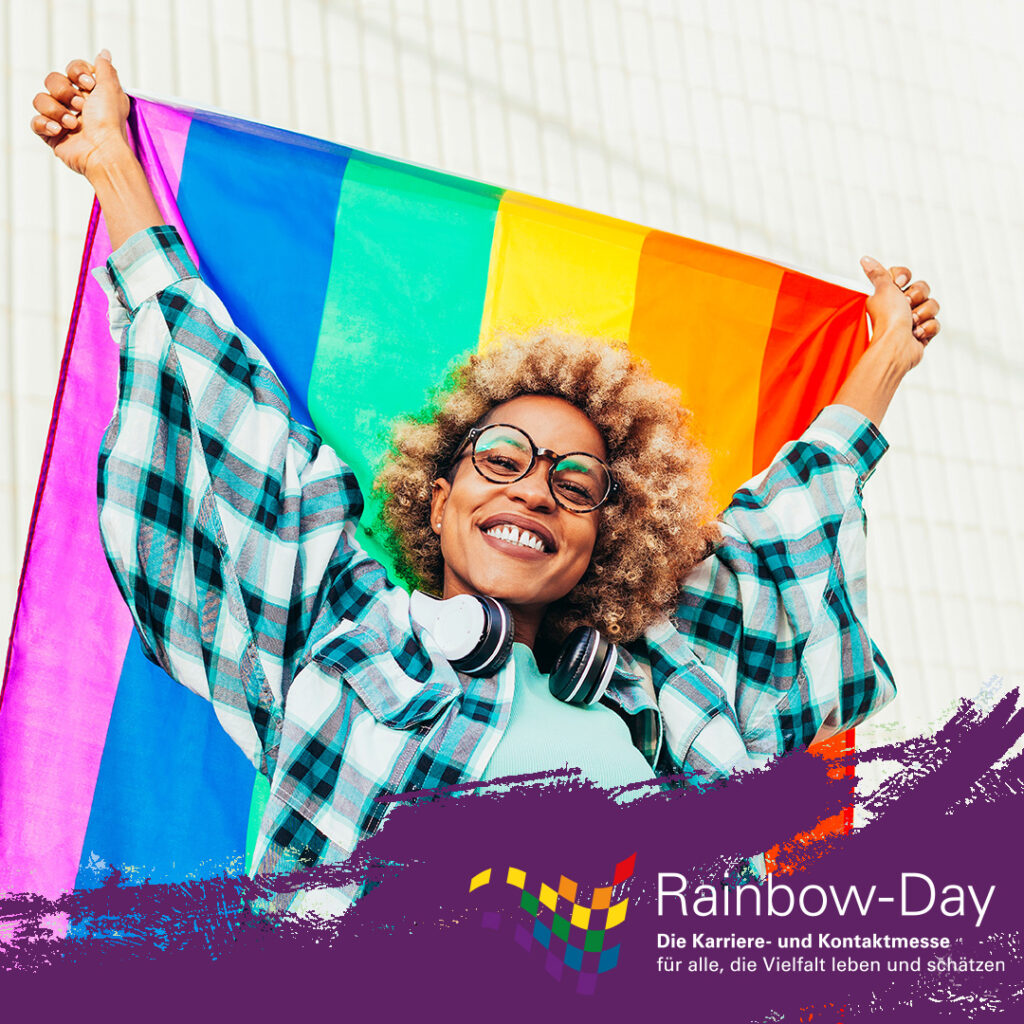
We are happy to be part of the first Rainbow Day on July 13 at the Goethe University in Frankfurt am Main.
The Rainbow Day provides all interested parties with an exceptional opportunity to enter into discussions with companies in a pleasant atmosphere, to explore their own career opportunities and to learn how a modern company offers all employees a contemporary, appreciative working environment.
The booth discussions at the exhibition stands in the auditorium center, which go beyond the company booths, offer an opportunity for exchange. Many other partners of Rainbow Day are represented: University institutions, student associations, the press – diversity is important to all of them.
The supporting program with lectures and panels goes one step further in terms of content and is also of interest to all those who do not currently wish to embark on a (new) career path.
The visitors’ lounge offers space to linger and exchange ideas, and free drinks are available here.
More information about the event is available on the Rainbow Day website (German):
Informationen für Besucher*innen – RainbowDay
RECAP
We were pleased to welcome Maxi Pichlmeier as a guest at our PROUT PERFORMER Lunch Talk on Thursday, May 4, 2023.
Click here for the recording of the conversation (German):
about Maxi:

For those who don’t know Maxi, digital media are anything but foreign to him and he has a lot to say when it comes to queer life, politics and media. Because being queer is still political in 2023! Maxi Pichlmeier’s TikTok account is all about queer news, queer politics and the gay community, to which he himself belongs. In his videos he processes his own experiences and wants to bring news to young (queer) people.
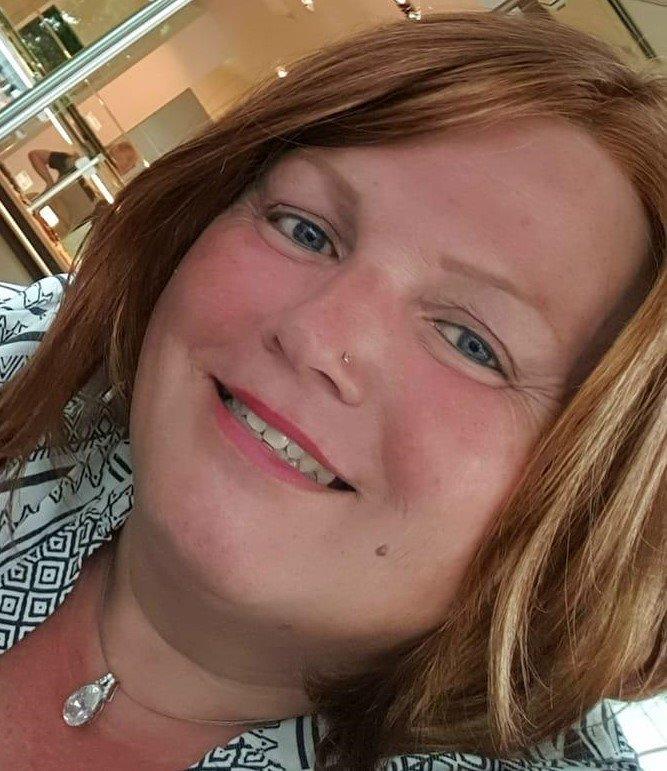
MYSTORY with …
Hanna
57 Years, Kreis Euskirchen
“For a very long time I was searching for
myself and at times I confused this with
the search for other, material things…”
Published: March 2023
Night of REalization.
It took 47 years for my life to make any sense at all. That’s how long it took before I was able to admit to myself that something very essential had always been wrong. But it was only then that I fully understood what that was.
Since then, I understand my life, looked backwards at and lived forwards, at all!
As a child, the awareness that I was different was already there, but it was more of a background noise. As time went on, however, these experiences, encounters, and thoughts that always felt so out of place and that I couldn’t really place began to accumulate. These things ran through my life like a red thread and only in retrospect did I really understand them.
For example, the first time I had painted toenails – long before my inner outing – I didn’t think, “Oh, how nice,” but “now it finally looks right!” I wondered about this thought in the same second and didn’t really understand where it came from.
There were many such experiences, all somehow small and insignificant, but in sum absolutely self-explanatory.
When I was about 15 years old, I was, as I see it today, very close to understanding what was going on with me. For example, I was waiting for my figure to develop in the same way as my girlfriends and wondered why it didn’t. When I look back now, it was quite clear. But at that time I couldn’t and didn’t want to dig any further…
Many years later, it came to – what I call – my “night of realization.” The night when all the puzzle pieces of my life finally fell into place. The night I then had to understand that I am a woman and always have been. That night when everything suddenly and fully made sense. On the one hand, it was simply great to finally have the explanation for everything that had moved me for decades: “Hanna, you are a woman and always have been. From the first day you were born, you have always thought, acted, and felt like a woman.” On the other hand, the realization of actually being a woman was extremely difficult to master and I oscillated back and forth between euphoria and suicidal thoughts! The topic “trans*” was in the room, but I just did not want to accept that I am also trans*.
And of course, I still had doubts, so I often said to myself, “You are crazy! You are sick! That’s why I found it very special that after my coming out there were some people who told me:
“Hanna, it’s about time that you understand it yourself”!
That helped me to manage these permanent doubts.
The reactions in the rest of my environment were mixed. My parents didn’t find out that their supposed son was actually a daughter, because they had already passed away before I came out. I couldn’t even begin to estimate how they would have handled it. Part of my family had the most difficulty dealing with it, and they tried to completely hide the issue. It wasn’t until years after I came out that they really started to confront the situation. Today everything is fine, but the journey was long and painful.
Simultaneously, I also had to sort out some important things for myself. My internal outing was one thing, but how should I implement it – especially at work? At the beginning, I still believed that I could keep it completely out of my everyday professional life, continue to pretend that I was a man, and only live out my true self in my free time. How naive I was back then… I then looked for a new job relatively quickly. Of course, I also applied for a job as the woman I am. It took a little while, but today I’ve been with my current employer for almost 8 years, and I took over my current position about 2 years ago.
Looking back, I realized for myself that only since I’ve been truly me, I’ve had something like a career. I always knew I was a good employee, but I could never really stand up for myself. I’ve been working openly as a woman for 8 years now, and I find it amazing how far I’ve come professionally. From night auditor to reception manager and service manager within a few weeks, then site manager with a team of 21 employees and now in my dream role.
I summarize it for myself like this: I first had to understand that I am a woman in order to be able to appear as self-confident as men usually do.
My coming out and my transition have of course not only brought changes at work, but also in the relationship with my wife. We have been together for over 27 years now and we have found that despite the changes and the turbulent time during my transition, our relationship has gained in quality and depth! Most of the people who know us from the past simply accept us for who we are and should there ever be any questions, our message is: Love knows no gender!
Today I can say: I have arrived!
For a very long time I was searching for myself and at times I confused this with the search for other, material things – and I had to realize that these things did not really make me happy. I have found true happiness in myself and only since I have found myself, I know what happiness really means!
DEAr Hanna, Thank you very much for YourStory!
On November 18, the federal cabinet decided on the action plan “Queer Leben”, as scheduled in the coalition contract. Different plans for acceptance and protection of sexual and gender diversity were hilighted, and six topic points were solidified:
- Recognition by law
- Participations
- Security
- Health
- Strenghtening of the Communities
- International issues
Update March 22, 2023
On March 20, the Queer Representative of the Federal Government Sven Lehmann welcomed to the launch event of the Aktionsplan “Queer Leben” in Berlin. PROUT AT WORK, together with numerous organizations, belongs to the circle of those who bring the action plan to life.
The aim of the event was to launch the official implementation of the action plan. The more than 200 participants from various associations and organizations exchanged ideas and formed working groups, which in turn will discuss the concrete implementation of the action plan’s projects in the coming months.
Prior to the event, 78 civil society organizations were selected from more than 140 applications in order to bring as many different perspectives as possible to the working groups. We are very pleased that PROUT AT WORK is also one of the selected organizations and will be represented by our board member Albert Kehrer.
The launch event as well as the formation of working groups represent the first necessary steps towards the implementation of the action plan for a queer-friendly society and we are looking forward to placing important topics around LGBT*IQ in the workplace there in the future.
THE AKTIONsPLAN IN THE WORK CONTEXT
In addition to topics such as the Self-Determination Act, the reform of the Parentage Act, and blood donation, other issues important to the work context were also addressed under the heading of “participation”. These include the following measures:
- Expansion of the diversity topic pillar as part of the “New Quality of Work (INQA)” initiative of the Federal Ministry of Labor and Social Affairs (BMAS);
- Research projects on the situation/discrimination of LGBT*IQ in the world of work as well as improving the promotion of projects for acceptance;
- Development of a guideline for employers that includes the recommendations for action of two studies on the “Third Option” in a comprehensible way for use in everyday work;
- Sensitization of employers, trainers, employee representatives for the concerns of LGBT*IQ employees and applicants;
- Support for raising awareness of LGBT*IQ issues in in-company training;
- Establishment of a dialogue process (federal government, states, collective bargaining parties, church employers) on improving the working conditions of LGBTIQ* in institutions of churches and religious communities;
- Promotion of diversity management in the federal public service;
Additional measures in the area of federal administration:
- Development of an internal federal diversity strategy (incl. creation of further training opportunities, support for the establishment and networking of employee networks and a strategy for diversity-sensitive personnel selection procedures);
- Implementation of diversity issues (incl. LGBT*IQ/gender identity) in initial, further and advanced training (e.g. qualification measures by the Federal Ministry of Defense [BMVg] in civilian and military training and by the Federal Foreign Office in training in the Foreign Service); Regularly strengthening the educational and advisory competence of the social service in the Bundeswehr on the diversity issue; Conducting systematic baseline analyses on the situation of LGBT*IQ (e.g., with the help of employee surveys);
- Sensitization of employees to implicit prejudices and integration in competence requirements/competence models;
- Sensitization and, if necessary, training of employees involved in recruitment processes;
For more information about the plan “Queer Leben”, feel free to drop by the Federal Ministry for Family Affairs, Senior Citizens, Women and Youth.
PROUT AT WORK Welcomes the Action plan “Queer Leben”
“In addition to topics such as the overdue Self-Determination Act, the reform of the Parentage Act, and a reform of blood donation, the action plan also addressed other aspects that are important for the work context, which we very much welcome and which provide important impetus for our work.” Albert Kehrer, CEO of PROUT AT WORK.
For more information around trans* in the workplace, the third option, and other workplace related LGBT*IQ topics, we encourage you to check out our free HOW TO guides.
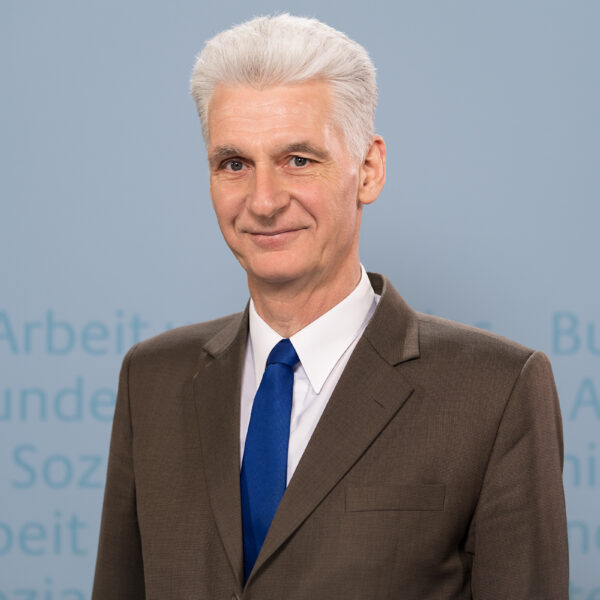
MYSTORY with …
Rolf
64 Years, Berlin
“It has always been important to me
to live with children, to be linked to
the future through children…”
Published: March 2023
Long Ways.
The first time I had sex with a man, it was still forbidden – it happened in what was then West Germany. Shortly after that, rumours about a newly discovered virus began to spread. Deadly. Soon it was clear that homosexual men were particularly affected. The German magazine Der Spiegel wrote about the “Schwulen-Pest,” a translation of the term Gay Plague. We had to be cautious.
Today I live in a different world. I am married to a man. And we have children, too.
This would not have been possible without fundamental changes in our laws during the last 30 years. What seems to be nothing special today was wishful dreaming or even unthinkable back then.
It has liberated me. I came out when I moved to Berlin, quite late, at the age of 35. My life would have been different if I had been clear about who I was and how I loved earlier. I had been living with a vague idea of bisexuality far too long. Today I think this was also because at that time I could not imagine how to combine my desire to have children and my love for men.
I am very grateful to all those in my life who have encouraged me on this path and made it possible. And I am happy for everyone who clearly knows early on and I understand everyone who needs time for this. The open interaction in queer networks can help and encourage people on this way. And these networks now exist in many federal agencies, including the ministries of the Federal Government.
LGBTIQ* employees still experience discrimination in the workplace far too often. Even small talk at the coffee machine can quickly lead to an unwanted outing. Often enough, not only their well-being at work, but also their professional future depends on the reactions of their superiors and colleagues. But only those who feel at ease can deliver the best results at work. Organisations, companies and administrations can actively contribute to an inclusive corporate culture. On INQA.de you can read how networks or interest groups in companies can help to improve the situation of LGBTIQ* employees at work.
Ending discrimination requires the support of those who are not affected. Through active solidarity (allyship), companies can promote diversity in the world of work. On INQA.de you find five tips on how managers and employees can work for diversity and show: We are Allies!
DEAR ROLF, Thank you very much for YourStory!

PROUT EMPLOYER Hogan Lovells
“The diversity of our employees is important to me – not only because of my role as Managing Partner and Diversity Sponsor, but also personally. As a company, we function best when people feel comfortable with us and have trust in our working relationship.”
Dr. Stefan Schuppert advises companies in the field of data protection and information technology. He is Managing Partner for the German offices of the international law firm Hogan Lovells and also Sponsoring Partner for Diversity in EMEA. In 2021 and 2022, he was recognized as a PROUT Executive Ally.
Hogan Lovells has been a PROUT EMPLOYER since 2017 – so it has been committed to LGBT*IQ diversity for a long time. Why is this particularly important to you?
Dr. Stefan Schuppert: As a global law firm, we have been committed to equal opportunity, appreciation and respect for many years. The diversity of our employees is important to me – not only because of my role as Managing Partner and Diversity Sponsor, but also personally. As a company, we function best when people feel comfortable with us and have trust in our working relationship. In an open working atmosphere, we can be creative and find innovative solutions for our clients. And the work is fun! It’s a positive sign for all our employees when we commit to equal treatment for all people and an appreciative, respectful working atmosphere.
In 2022, Hogan Lovells’ LGBT*IQ network, Pride+, celebrates its 5th birthday. Congratulations! What do you see as the biggest success of the network so far?
Dr. Stefan Schuppert: Thank you! We are very proud that this network has been part of our everyday life for five years. Pride+ is present and active at all our locations and provides assistance even in countries where it is not so easy to promote LGBT*IQ issues. Pride+ promotes knowledge about the LGBT*IQ community, sensitizes people to diversity issues and supports the visibility of role models. And it connects us to one another – because as “allies” we demonstrate our solidarity with our LGBT*IQ colleagues.
What advice would you give to companies that are still at the very beginning of their commitment to LGBT*IQ diversity?
Dr. Stefan Schuppert: My advice would be: just do it and keep at it, even if the seats at the first diversity events are not booked out right away. It’s important to raise awareness of the issues. Because it’s often ignorance that leads to discrimination. This is where PROUT AT WORK, as an important partner, can help to overcome uncertainties and build up knowledge.
For the acceptance of the topic, it’s also important that the “tone from the top” is visible every day. My advice is to win over important role models in the senior management team for the topic.
Ultimately, it is crucial that all employees – regardless of hierarchy – are committed to the topic of diversity and help create an open and appreciative culture.
Where do you see the challenges to LGBT*IQ diversity at Hogan Lovells in the coming years?
Dr. Stefan Schuppert: Especially after the pandemic and in times of many very present crisis situations, it is important to sensitize employees again to LGBT*IQ and other diversity topics. Here we would like to create as many opportunities and incentives as possible. We offer exciting lunch talks with external and internal speakers, workshops, team events and much more. Because it is often ignorance that leads to insecurity, this is where we can provide our employees with concrete support. For example, with our guideline for gender-sensitive language, which we have been using for our general internal and external communications since the beginning of the year. We attach great importance to offering everyone in our office an open working environment in which they can be themselves, every day.
Which joint initiatives on LGBT*IQ diversity do you particularly remember, and which projects are you looking forward to in the coming period?
Dr. Stefan Schuppert: I remember many great joint initiatives that we have carried out with PROUT AT WORK in the past five years. For example, our inspiring networking and awareness workshops, or the ToGathering event on inclusive language with clients and the PROUT AT WORK dinner with very interesting keynote speakers. We can’t do enough to further the visibility of the LGBT*IQ community, so I’m looking forward to many more exciting projects in our cooperation.
Dear Dr. Stefan Schuppert, thank you very much for the interview!

PROUT EMPLOYER ERGO
“I believe that in addition to the pure visibility that we achieve with pride networks, for example, other things are also important. We need to point out unconscious bias. We need gender inclusive language. ”
Markus Bader is 45 years old and lives with his partner in Hamburg. After studying business informatics, he joined Hamburg Mannheimer Versicherung, part of the ERGO Group, as IT coordinator in 2002. After 3 years he was able to take over a first management position as group leader in this area. In 2013 he had the opportunity to join a department manager position in ITERGO, the IT service provider of the ERGO Group. In 2018, he left IT with a step into business as division manager for Life Classic Operations.
As a leader at ERGO, what does it mean for you to advocate for more LGBT*IQ diversity and visibility?
Markus Bader: As a gay and outed executive, I think it’s important to advocate for more visibility and I’m glad that we’ve also had a pride network for a little over 2 years now and that I can get involved there. We know that there are still many LGBT*IQ people who decide against coming out in a professional context because they fear disadvantages. We need role models who make it clear that your choice of job and your career goals are not dependent on your sexual orientation.
What experiences in your career so far have shaped you in terms of LGBT*IQ?
Markus Bader: In fact, in the first (un-outed) years of my career, I had the experience that derogatory remarks were made about outed colleagues regarding their sexual orientation. Not always and often, but it happened. That definitely shaped me for the years to come. I didn’t feel ready to expose myself to that at the time. The confidence to come out to colleagues didn’t develop until a few years later. However, I never experienced rejection or disadvantages and to this day I am happy and grateful that I can be open with my sexuality with my employer. I was therefore all the more pleased that, in addition to the many other diversity issues, the topic of LGBT*IQ has also become an institution at ERGO with the Pride network.
You are committed to LGBT*IQ diversity at ERGO, to what extent do you receive support from your colleagues?
Markus Bader:
From my immediate colleagues, I feel the normality and matter-of-factness that my life model is met with is actually the strongest support. Today, I never have the feeling that someone avoids asking me how my summer vacation with my partner was, for example, just to avoid bringing up the subject. On the contrary – I experience just as much interest in my life and partnership as I do with others.
pride@ergo was founded by committed colleagues.
The Diversity Management Team has provided support from network building to the present day, and the godmother of our network is our Chief Human Resources Officer. This is an important contribution on the part of the employer and also shows me that the topic is important and is seen.
You were part of the PROUT Executives list in 2021 and 2022, congratulations again! What did that mean for you and how did you perceive the reactions?
Markus Bader: I was very happy about the positions on the Prout Executives list. For me personally, it was also an exciting process – I’m not very active on my social media channels, or rather a consumer than a creator. Sharing the list position on LinkedIn, among other places, was another new experience for me – and I received positive feedback without exception afterwards – from previously unknown people, from people I had lost sight of, but also from my immediate environment.
What specific actions for more LGBT*IQ diversity are you concerned about right now?
Markus Bader: I believe that in addition to the pure visibility that we achieve with pride networks, for example, other things are also important. We need to point out unconscious bias. We need gender-inclusive language. We have already revised the language and image of our brand presence at ERGO. This will certainly not happen overnight, but we have made a start, and ERGO must continue to develop.
Dear Markus Bader, thank you very much for the interview!
Regularily, our board member Albert Kehrer invites an inspiring role model of the LGBT*IQ community or an LGBT*IQ Ally for a chat. You can look forward to an interesting exchange about role models and visibility in the LGBT*IQ community.
This event took place in German.
guest of the day
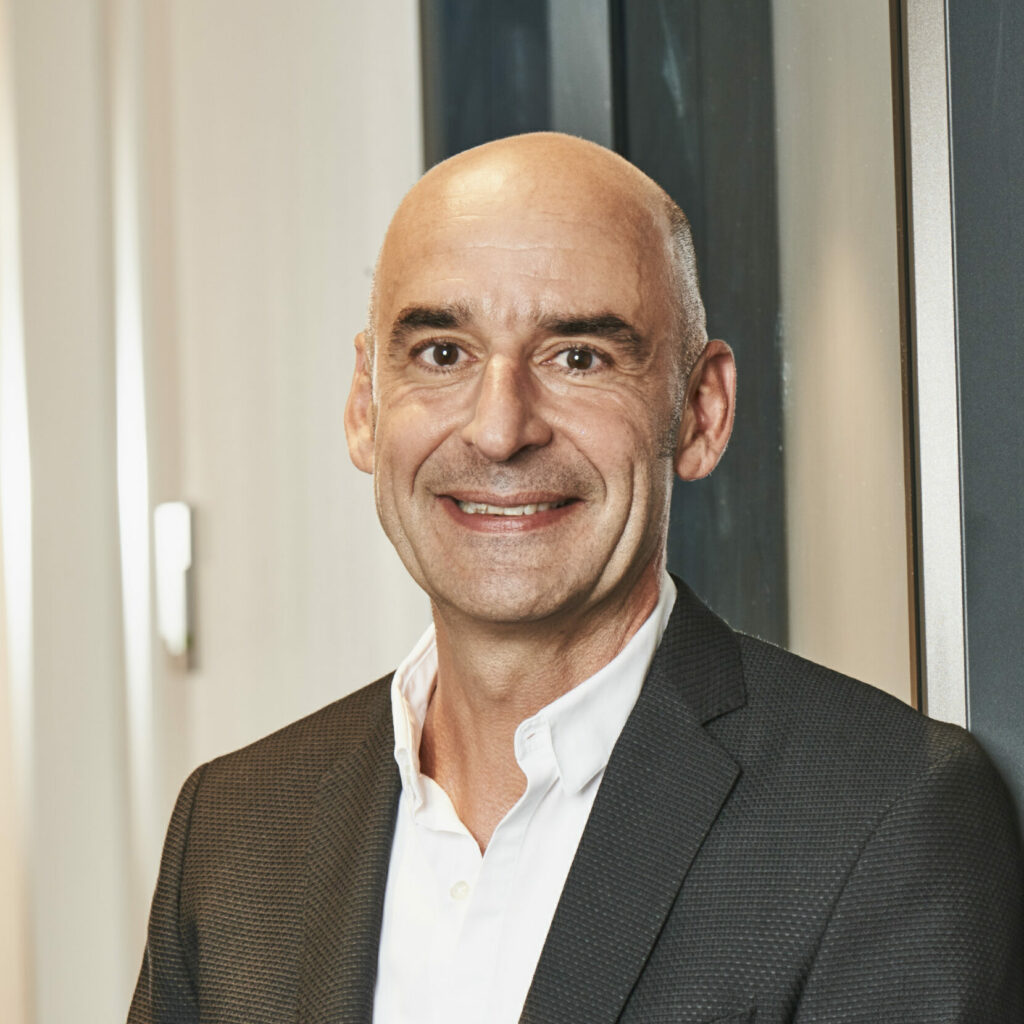
Dr. Christophe Campana
Founder and Managing Director of Campana & Schott
3rd place PROUTExecutiveAllies 2021
Dr. Christophe Campana is founder and managing director of the Campana & Schott group of companies. He has over 25 years of experience in (top) management consulting and is a member of various expert and advisory boards. He has been instrumental in shaping the company’s open, tolerant and diverse culture from the very beginning.
Christophe is also a sponsor and one of the biggest supporters of Campana & Schott’s LGBTQ+ network SCOUT. He has already accompanied the community on its way to coming out and is its trusted ally, advisor and friend.